
I’m speaking from experience here. At Relific, I’ve worked directly with clients on all sorts of CSR initiatives. Our platform’s made it a breeze to organize, monitor, and crucially measure real impact. I’ve seen digital literacy programs take root in rural Rajasthan and women’s livelihood projects in Delhi truly gain momentum. When a company’s CSR strategy is clear and intentional, it doesn’t just polish up the brand image; it energizes teams and delivers results you can actually track. In today’s market, purpose isn’t some fluffy add-on. It’s a serious growth lever.

And here’s what I believe:
“Purpose isn’t a side project; it’s the compass that guides sustainable growth. When businesses lead with heart, they don’t just earn trust, they become unstoppable .”
In today’s market, just having a great product isn’t enough. Employees want to work for companies with a purpose, and customers expect brands to take real action on societal issues. In fact, CSR even carries legal weight here in India; eligible companies are required to allocate 2% of their profits to it. Yet, many still treat this as a simple checkbox exercise, which risks both compliance and credibility.
That’s exactly why we created this step-by-step blueprint. It’s designed to help you move from good intentions to a powerful CSR strategy. Inside, you’ll discover the frameworks, business cases, and a three-phase plan you can put into practice starting today.
Because the real question isn’t whether your business should invest in CSR, it’s whether you’re ready to turn it into a competitive advantage that drives both impact and profitability.
2 What is a CSR Strategy?
A Corporate Social Responsibility (CSR) strategy is the deliberate plan for proving that your company's values are real. Instead of seeing it as separate from business, think of it as the blueprint for integrating your company's heart and ethics into everything you do.
Think of your CSR strategy as a public promise of genuine commitment. It’s the blueprint showing the world exactly how your company contributes to lasting, sustainable growth.
This isn't just about writing checks; it's about actively managing every ripple effect your business creates across the** environment, society, and economy. The strategy ensures that every single action, from what happens on the factory floor to your biggest philanthropic gifts,** is a conscious effort to create good things for everyone involved: your employees, your customers, the wider community, and our planet. It’s how you actually turn good intentions into real, powerful, and measurable results.
2.1 Beyond Philanthropy: The Modern Definition
While philanthropy, or charitable giving, is one component of CSR, it's not the whole story. A modern CSR strategy goes far deeper. It’s about building a business that is inherently ethical and responsible, not just one that gives money away. For example, a company with a strong CSR strategy might redesign its supply chain to use ethically sourced materials (ethical responsibility) or invest in renewable energy to power its operations (environmental responsibility). This isn't just about a brand "looking good", it’s about a company being good, from the inside out.
2.2 The Four Pillars of CSR
To fully understand a CSR strategy, it’s helpful to visualise it in its four core pillars.
-
Environmental Responsibility: Focuses on reducing a company's environmental footprint. This can include everything from minimising waste and pollution to adopting renewable energy and sustainable sourcing practices.
-
Ethical Responsibility: This is about operating your business in a fair and ethical way. It covers fair labour practices, avoiding conflicts of interest, and ensuring transparency in all business dealings.
-
Philanthropic Responsibility: This is the traditional view of CSR contributing to society through donations, volunteering, and community partnerships. It's an important piece of the puzzle, but not the only one.
-
Economic Responsibility: This is the foundational pillar. It means operating as a profitable business while still adhering to your other responsibilities. A company must be economically viable to do good.
3. The Compelling Business Case for CSR
If a strong sense of purpose still doesn't quite seal the deal, the financial returns definitely should. Leading thinker Dr. Michael E. Porter argues that CSR shouldn't be viewed as a cost at all. Instead, it can be a huge source of innovation and competitive advantage for your business.
“The purpose of a company is not just to make a profit. It’s to solve the problems of people and planet, and to make a profit doing it.”
3.1 Boosting Brand Reputation and Trust
In a world of highly informed shoppers, your brand's reputation is everything. This isn't just theory, it's driving sales! A 2023 study showed that** 77% of Gen Z and 72% of Millennials** are ready to pay more for genuinely sustainable products.
When you demonstrate a real, honest commitment to social and environmental issues, you do much more than just sell a product; you forge a powerful emotional connection with your customers. You become a brand they can wholeheartedly trust, proudly stand behind, and genuinely feel good about supporting.
3.2 Attracting and Retaining Top Talent
The best talent today, especially Millennials and Gen Z, choose their employers based on what the company stands for. This isn't just a hunch, it's a hard truth: 64% of Millennials (the biggest chunk of your workforce) won't even interview if a potential boss lacks strong CSR practices.
A great CSR program is the clearest way to signal, 'We care about more than just the bottom line.' When your team feels a genuine sense of pride in your company's mission and impact, their engagement skyrockets. This feeling is powerful, translating directly into higher productivity and much better employee retention.
3.3 Driving Financial Performance
The benefits of CSR aren't just intangible. A well-designed strategy can directly impact your bottom line:
-
Increased Sales: 85% of companies with a clearly defined purpose have seen their sales increase over the last three years.
-
Cost Savings: CSR can lead to significant cost savings. For example, an investment in energy efficiency can lower your utility bills, and sustainable supply chain practices can reduce waste and streamline operations.
-
Investor Confidence: What's more, 73% of investors report that a company's social impact factors into their investment decisions, making responsible behaviour a key to attracting capital.
4. Foundational CSR Frameworks and Models
To build a CSR strategy, you need a solid foundation. These two frameworks are excellent as starting points.
4.1 Carroll's CSR Pyramid
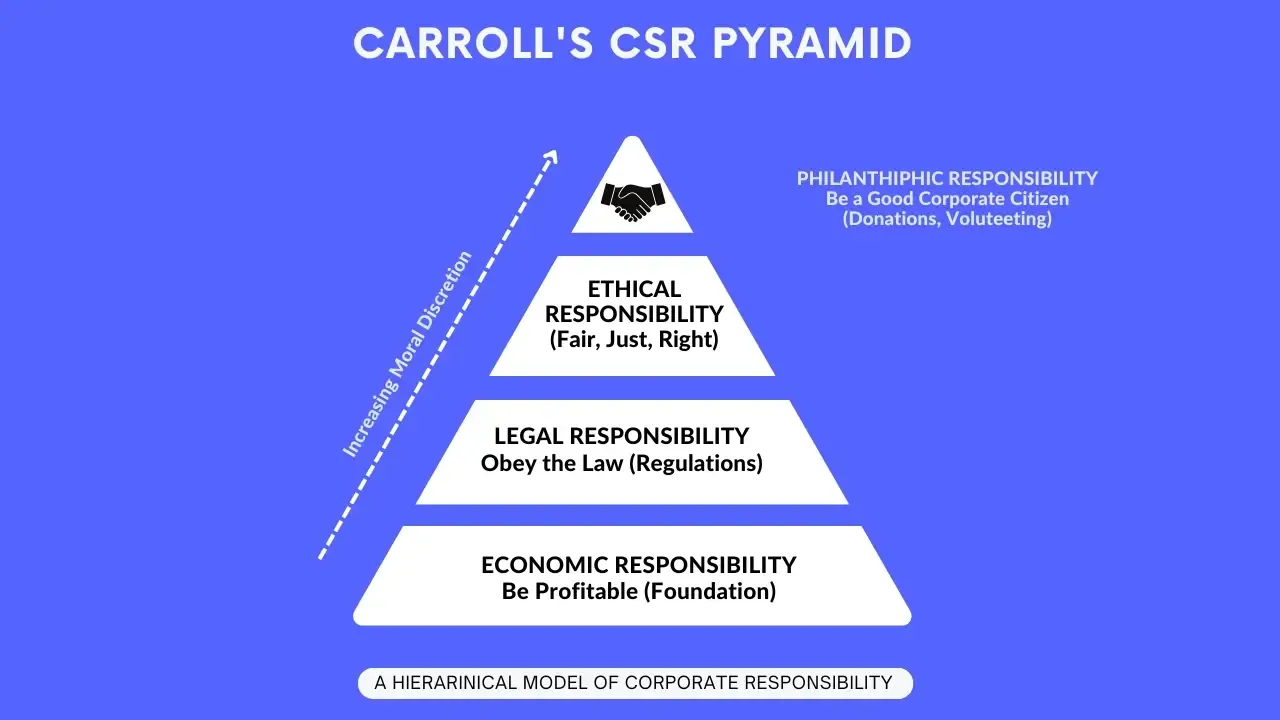
Developed by business professor Archie Carroll, this framework provides a simple, hierarchical model for a company's responsibilities:
-
Economic Responsibility (Base): Be profitable. This is the foundation upon which all other responsibilities are built. A business cannot be a good citizen if it's not financially stable.
-
Legal Responsibility: Obey the law. Companies must adhere to all laws and regulations.
-
Ethical Responsibility: Be ethical. Go beyond the law to do what is right, fair, and just.
-
Philanthropic Responsibility (Top): Be a good corporate citizen. This includes donating to charities, sponsoring community events, and engaging in local partnerships. Carroll’s pyramid reminds us that a company's journey toward social responsibility starts with its economic viability, then moves up to a place of broader positive impact.
4.2 The UN Global Compact

The United Nations Global Compact is the world’s largest corporate sustainability initiative. It provides a universal framework of ten principles for businesses to follow in four key areas:
-
Human Rights: Support and respect the protection of internationally proclaimed human rights.
-
Labour: Uphold the freedom of association and the right to collective bargaining, eliminate all forms of forced and compulsory labour, abolish child labour, and eliminate discrimination in employment.
-
Environment: Support a precautionary approach to environmental challenges, undertake initiatives to promote greater environmental responsibility, and encourage the development and diffusion of environmentally friendly technologies.
-
Anti-Corruption: Work against corruption in all its forms, including extortion and bribery.
Adopting the Global Compact's principles is a powerful way for companies to demonstrate their commitment to a more sustainable and equitable world.
5. The Step-by-Step Blueprint: A 3-Phase Guide to Your CSR Strategy
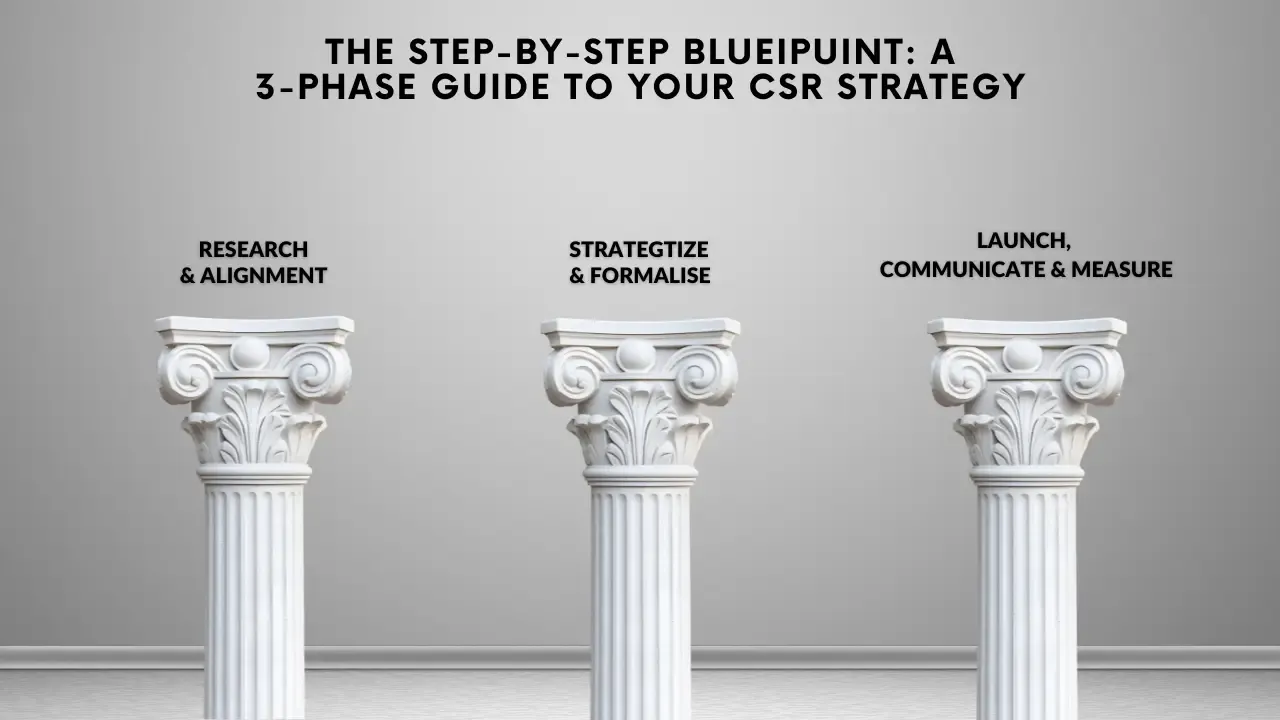
I’ve had a front-row seat to the success stories and the missteps that companies make when building their CSR strategies. The good news? You can avoid most of them by following this simple, actionable, 3-phase guide on how to create a CSR strategy that works.
5.1 Phase 1: Research and Alignment
This phase is all about understanding your current state and setting a solid foundation.
-
Step 1: Conduct a Materiality Assessment (The Foundation). Before anything else, conduct a Materiality Assessment. This formal process identifies the social and environmental issues that are most significant to both your business's success and the concerns of your stakeholders (employees, customers, community, investors). Don't just guess; actively co-create this list through surveys, focus groups, and interviews with community leaders. This ensures your CSR is focused on issues where your company can have the biggest, most authentic impact.
-
Step 2: Align with Core Company Values. Your CSR strategy should never feel like a separate, "add-on" program. It must be woven into the very fabric of your company's values. Ask yourself: "How can our social impact goals support and reinforce our mission?"
-
Step 3: Secure Executive Buy-in. Without leadership support, your CSR initiative is likely to fail. Present a compelling business case to your C-suite and board. Show them the ROI, the talent benefits, and the reputational gains. Make it clear that this isn't a cost, it's an investment.
5.2 Phase 2: Strategise and Formalise
Once you have a strong foundation, it’s time to build the plan.
Step 4: Form a Dedicated CSR Team. Appoint a cross-functional team with members from different departments. This ensures a variety of perspectives and helps embed CSR across the entire organisation, not just in one department.
Step 5: Set SMART Goals. Your goals should be Specific, Measurable, Achievable, Relevant, and Time-bound. Instead of "we want to be more sustainable," a SMART goal would be "we will reduce our carbon emissions by 25% by 2030."
Step 6: Formalise Commitments. This is where you decide on the level of your commitment. Will your goals be aspirational (things you hope to achieve) or prescriptive (firm, public promises)? Formalising your commitments adds accountability and shows stakeholders you're serious.
Step 7: Strategy Check: Choosing Your Core Pillar: Before launching, ensure your strategy is anchored to a specific pillar where your business has a competitive advantage. For an IT company, focusing on Ethical responsibility (data privacy, AI bias) or Philanthropic (digital literacy) is strategic. For a manufacturing company, Environmental (supply chain sustainability, emissions) and Economic (sustainable sourcing) are the natural focus areas. A powerful strategy creates shared value by solving a social/environmental problem using your company's core strength.
5.3 Phase 3: Launch, Communicate, and Measure
A great strategy is nothing without flawless execution and transparent communication.
Step 8: Launch and Communicate Transparently - Avoid Greenwashing. Announce your new strategy internally and externally. Use storytelling to share your mission, your goals, and your "why." To avoid the accusation of greenwashing (false or misleading claims), your communication must focus on action and measurable results, not just good intentions. Be radically transparent about what you’re doing, what you’ve achieved, and, critically, what you’re still working on and the challenges you face. Authenticity builds lasting trust.
Step 9: Partner, Engage, and Vet Collaborators. Collaborate with NGOs, non-profits, and community leaders. These partnerships lend credibility and expertise to your efforts. Conduct due diligence on all non-profit partners to ensure their financial stability, legal compliance, and operational goals align perfectly with yours. Engage your employees by creating opportunities for them to volunteer or get involved in the cause, fostering a sense of ownership.
Step 10: Measure Impact, Report Results, and Optimise. You can’t improve what you don’t measure. Track your progress against your SMART goals and share your results in an annual CSR or ESG report. To manage this complexity, the best practice is to use a dedicated CSR platform (like Relific). This ensures your data is accurate, auditable, and instantly accessible for transparent reporting, holding you accountable to stakeholders and providing valuable insights for future strategies.
6. Real-World CSR Case Studies: Lessons from Industry Leaders
We all need to learn from others' successes and mistakes. Here's a look at how some of the world's most successful companies have integrated purpose and profit.
6.1 Integrating Purpose and Profit: Microsoft and HP
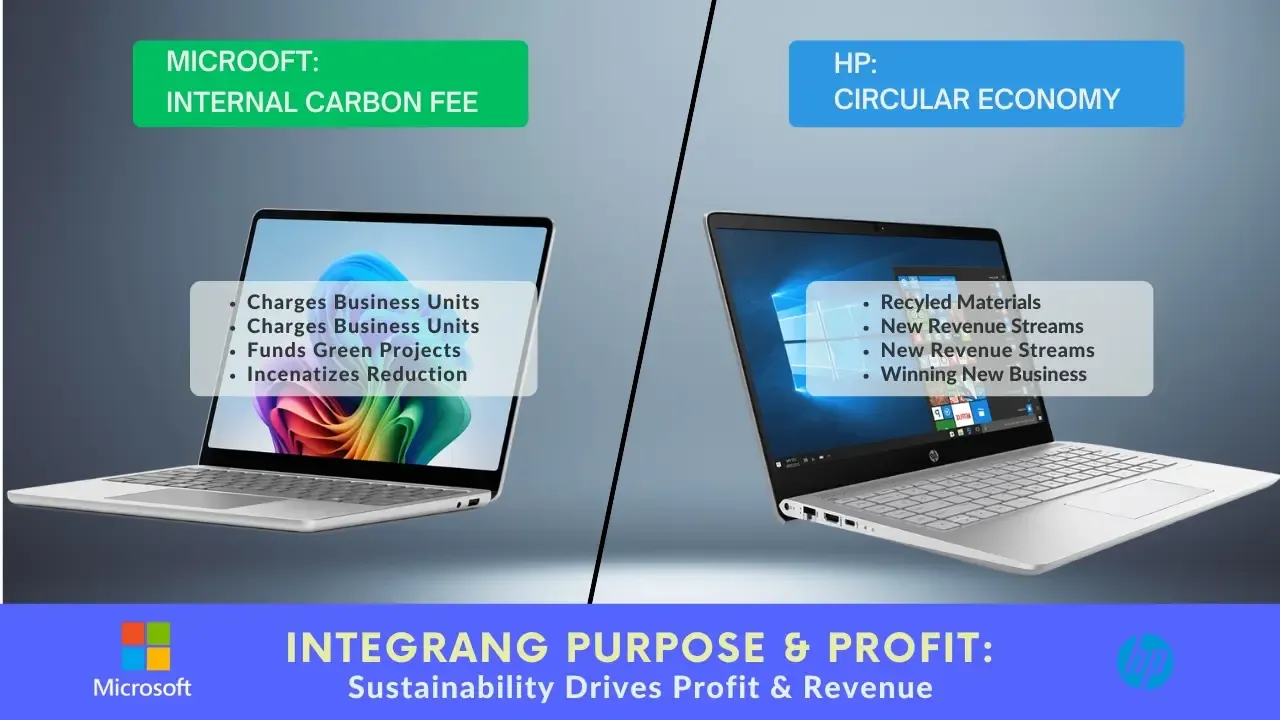
You might think that sustainability is a cost centre, but companies like Microsoft and HP have proven it can be a source of revenue and savings.
- Microsoft:
In 2012, Microsoft implemented an internal carbon fee, charging each business unit for its carbon emissions. The money collected is then used to fund renewable energy projects and efficiency upgrades across the company. This initiative not only made Microsoft a leader in corporate sustainability but also created a financial incentive for every department to reduce its carbon footprint.
- HP:
HP has successfully linked sustainability to new revenue streams. By building products with recycled materials and offering services that help customers recycle their old electronics, they’ve made their commitment to a circular economy profitable. In 2020, HP reported that it generated over $1 billion in commercial sales directly tied to sustainability criteria. This shows that a strong ESG reputation is now a key factor in winning new business.
6.2 The Power of Brand Activism: Patagonia and Unilever
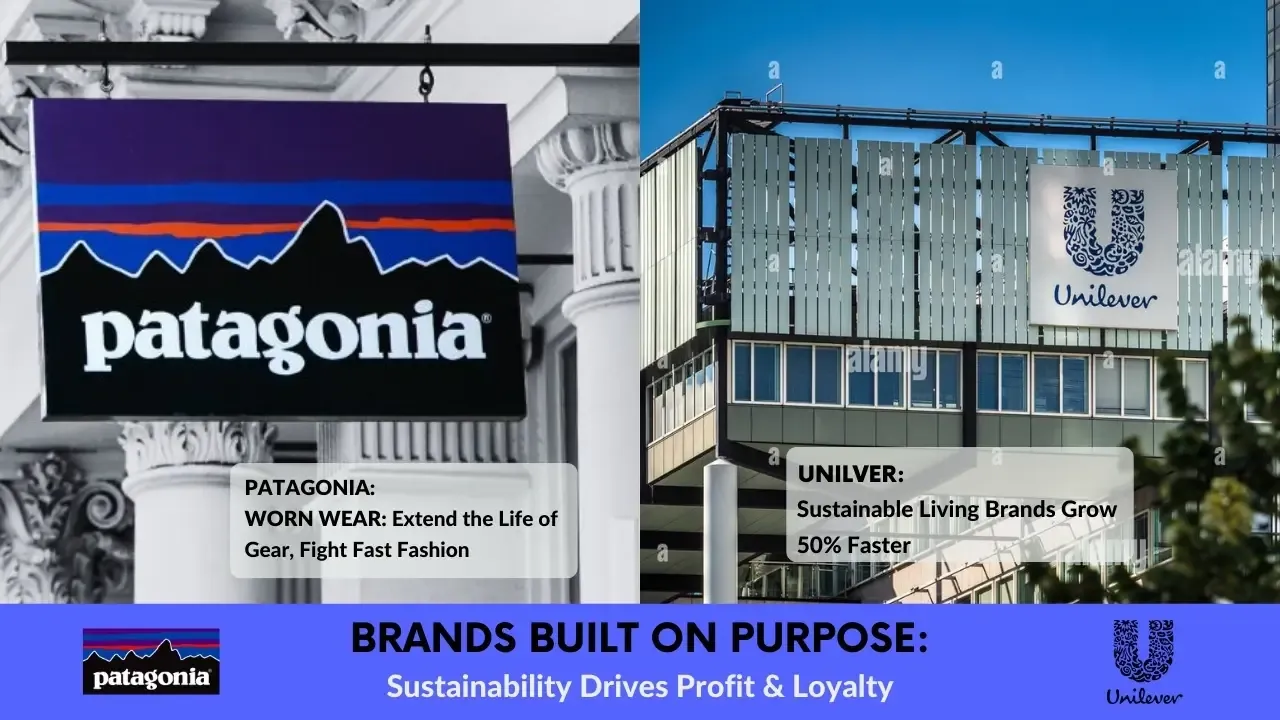
These companies aren’t just talking about doing good; they've built their entire brands around it.
- **Patagonia: **
The outdoor apparel company has a long history of environmental activism, but its "Worn Wear" program is a perfect example of turning a purpose into a profitable business unit. The program encourages customers to trade in and purchase used gear, reducing waste and extending the life of their products. It's a powerful statement against fast fashion and a genuine way to build brand loyalty.
- Unilever:
Under the leadership of former CEO Paul Polman, Unilever launched the "Sustainable Living Plan." The plan was a massive undertaking, but its success is undeniable. In 2017, the company reported that its "sustainable living brands" were growing 50% faster than the rest of the business. This proves that consumers are willing to put their money behind brands that align with their values.
6.3 Investing in People: Netflix and Starbucks
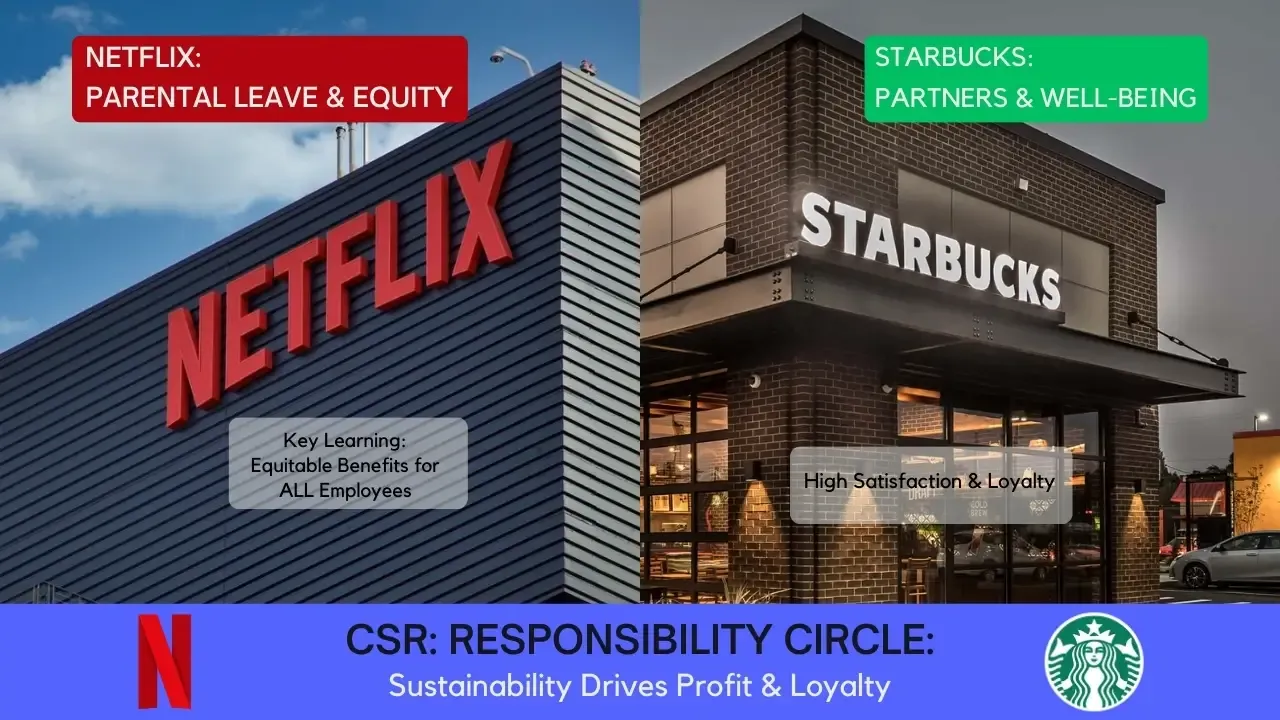
CSR isn't just about the environment or charitable giving; it’s about a company’s responsibility to its people.
-
Netflix: The company made waves with its famously generous unlimited paid parental leave policy. However, it’s worth noting a key learning moment: the policy initially applied only to salaried streaming employees, not to the company's lower-wage DVD distribution centre workers. This sparked a discussion about the importance of equitable benefits across all employee levels, a crucial part of building an authentic and inclusive CSR strategy.
-
Starbucks: Starbucks has long been a leader in people-focused CSR. They refer to their employees as "partners" and have built a strong brand around well-being and diversity. Their initiatives include comprehensive healthcare, college tuition assistance, and a dedicated focus on building an inclusive culture. This investment in their workforce has resulted in high levels of employee satisfaction and a deeply loyal and engaged team.
7. Measuring the ROI of Your CSR Strategy (A Unique Value Add)
You’ve built your strategy and you’re executing your plan. But how do you know if it's working? Measuring CSR’s ROI requires a modern approach that goes beyond just financial metrics. This is where your CSR initiatives translate into measurable Environmental, Social, and Governance (ESG) performance, the language investors use to assess a company’s long-term sustainability and risk.
7.1 Beyond the Bottom Line: A New Approach to ROI
While a direct financial ROI can be hard to measure, the non-financial returns are often even more valuable. These include a stronger brand, a better company culture, and a more resilient business. We need to look at both quantitative and qualitative metrics.
-
Key Quantitative Metrics: Your Measurable ESG Data. These are the numbers you can track that directly feed into your ESG reports.
-
Employee Metrics (Social Pillar): Track employee retention rates, talent acquisition costs (do they go down?), and employee engagement scores. This data directly addresses the "S" (Social) pillar of ESG.
-
Financial/Environmental Metrics (Economic & Environmental Pillars): Look for cost savings from reduced energy consumption or waste, increases in revenue from sustainability-driven products, and tax benefits from charitable contributions. Specifically, tracking greenhouse gas emissions reduced or minimizing water usage are key metrics for the "E" (Environmental) pillar.
-
Key Qualitative Metrics: These are the things you can’t easily put a number on.
-
Brand Sentiment: Track brand mentions, media coverage, and customer reviews to gauge public perception.
-
Customer Loyalty: Use surveys to see if your CSR efforts are driving customer loyalty and repeat business.
-
Stakeholder Feedback: Ask for feedback from your community partners and non-profit collaborators.
7.2 Addressing the Challenges of Measurement
It’s important to be honest about the challenges. There is no one-size-fits-all formula for measuring CSR impact. The benefits can be long-term, making them difficult to quantify in a single quarterly report. Your goal shouldn’t be to find a perfect number, but to use a variety of metrics to tell a compelling story about your progress and impact.
8. The Future of CSR: Emerging Trends and Best Practices
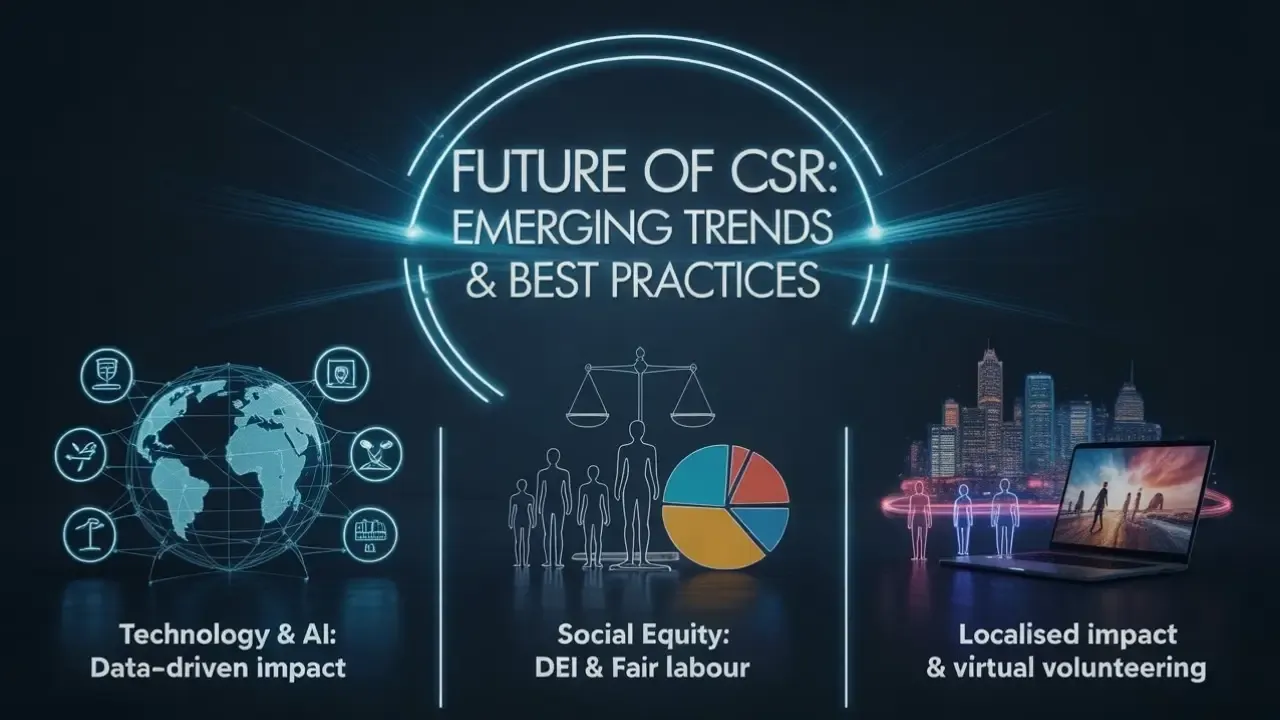
CSR is constantly evolving. Here are some of the trends that are shaping the future of purpose-driven business.
8.1 Technology and AI: Data-Driven Impact
Technology is transforming how we do CSR. Artificial intelligence (AI) is being used to analyse supply chains to identify ethical risks and track a company’s environmental footprint in real-time. This allows for more precise and data-driven decisions. However, the rise of AI also comes with a new ethical responsibility: ensuring that the technology itself is developed and used without bias and for the social good.
8.2 The Rise of Social Equity: DEI and Fair Labour
Beyond philanthropy, there is a growing focus on social equity, diversity, equity, and inclusion (DEI). Companies are moving beyond simple statements and are taking action to address systemic inequality in their hiring, promotion, and compensation practices. This trend emphasises the importance of fair labour and creating a just and equitable workplace for all.
8.3 Localised Impact and Virtual Volunteering
As the world becomes more interconnected, there is a renewed appreciation for local impact. Companies are focusing their efforts on the communities where they operate. The rise of virtual volunteering, especially in the wake of the pandemic, has also made it easier for employees to give back, regardless of their location.
9. Conclusion: From Plan to Sustainable Impact
A successful CSR strategy isn't about perfection; it's about progress, transparency, and a genuine desire to be better. The world is watching, and it's time to build a business that you and your community can be proud of.
Frequently Asked Questions (FAQs)
CSR is a self-regulating business model that helps a company be socially accountable to itself, its stakeholders, and the public. By practising CSR, companies can be conscious of the kind of impact they're having on all aspects of society, including economic, social, and environmental.
A CSR strategy is a clearly defined plan that outlines a company's goals, objectives, and specific actions for contributing to a positive social and environmental impact. It integrates these purpose-driven initiatives into the core business operations and decision-making processes, rather than treating them as separate charitable activities.
CSR is a self-regulated commitment that defines the actions a company takes to be a good corporate citizen (e.g., funding a literacy program). ESG (Environmental, Social, and Governance) is the standardized framework used by investors to measure, score, and evaluate the non-financial risks and long-term sustainability of CSR actions. Think of CSR as the philosophy and activities, and ESG as the rigorous, data-driven reporting system for investors.
A: Absolutely! A small business's CSR strategy can be more focused and personalised. It could be as simple as a local recycling program, a partnership with a nearby non-profit, or a commitment to ethical sourcing from local suppliers.
Greenwashing is essentially a corporate deception: it's the practice of making a company, its products, or its policies appear environmentally friendly when they are not. This involves misleading claims, vague language, or exaggerating small, minor sustainable efforts to purposely distract from the company's much larger, more harmful operations. Ultimately, it is a superficial marketing trick that betrays consumer trust. To have a robust and honest CSR strategy, a company must replace this deception with radical authenticity and transparency about its actual impact.
CSR isn't marketing; it's integrity. When it's a genuine core value, it creates real power. Customers and employees instantly spot "greenwashing" or fake efforts. True effectiveness requires authenticity woven into your business model.