
Key Takeaways: How to Choose CSR Software
-
Infrastructure over Dashboards: A real CSR platform doesn’t just show data; it protects it. You need a "clean-at-source" entry to avoid the manual reporting patches.
-
Materiality-First Features: Don't buy generic. Your software must support the specific GRI, SASB, or CSRD indicators your sector actually reports on, including those tricky EU double materiality assessments.
-
Structural Integration: Integration with your HRIS shouldn't be a cosmetic "plug-in." It needs to be a bidirectional sync. Anything less leads to stale data, audit failures, and a mountain of "culture debt."
-
Security and vetting are non-negotiable: Minimum standards require AES-256 encryption, 90-day API key rotation, and automated KYC/AML biometric screening for global NGO partners.
-
mpact > Participation: The best platforms go beyond measuring employee participation rates and offer predictive impact modelling to determine where capital creates the most durable change.
The Question Nobody Is Asking about CSR Software
Most CSR software buying guides start with features. Dashboards. Integrations. NGO networks. They read like spec sheets, and they answer a question most organisations haven't properly asked: What is this software supposed to do for us beyond compliance?
Here is our position, and we'll defend it throughout this piece: CSR software is not a reporting tool dressed up with social purpose. At its best, it is the operating architecture that determines whether corporate giving creates a durable impact or disappears into spreadsheets, good intentions, and annual reports nobody reads.
The stakes of getting this wrong are higher than most leadership teams acknowledge. A poorly chosen platform doesn't just create friction; it creates what we call culture debt: the accumulated drag of a system that employees resent, auditors can't verify, and regulators will eventually scrutinise. You don't feel it immediately. You feel it when a data request from your CFO takes three weeks to answer, or when a regulatory filing reveals that your volunteer hours and your HRIS have never agreed on a single number.
"The right CSR software doesn't just track what you've done. It determines the quality of what you can prove and the ambition of what you'll attempt next."
This guide is written for organisations that have moved past the question of whether to invest in CSR infrastructure. It's for the practitioners, strategy leads, and compliance officers who need to know what they're actually choosing between and why the difference matters.
How Do You Align CSR Software with Materiality and CSRD Requirements?
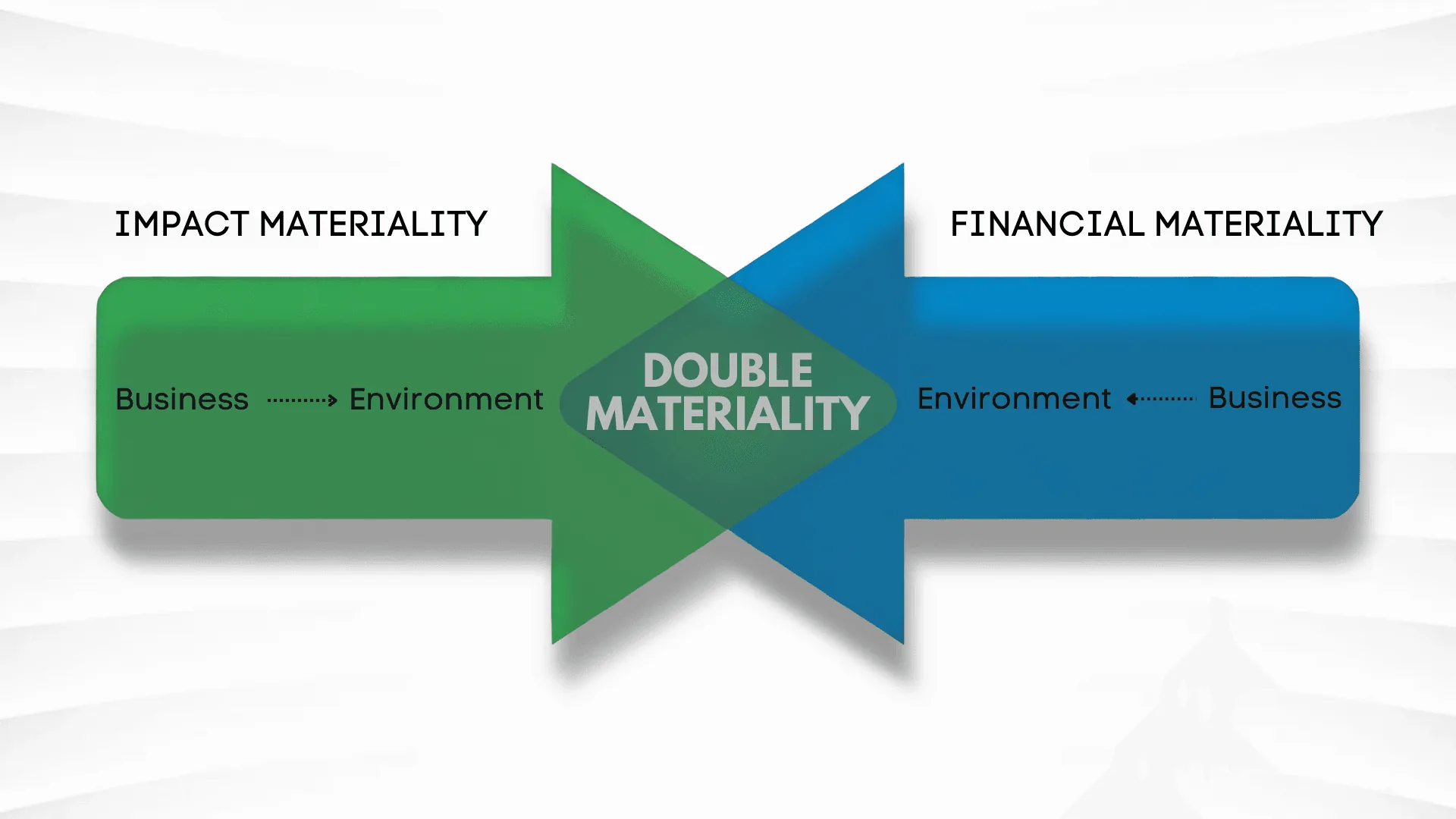
The most critical step in evaluating CSR software is ensuring it tracks the specific material topics relevant to your industry and regulatory environment, not just generic impact metrics. The GRI Standards and SASB frameworks exist precisely to make this question answerable.
A financial services firm has different material topics than a consumer goods brand. The software you choose must be built to track what genuinely matters to your stakeholders. For organisations operating within the European Union, the CSRD introduces a specific requirement: double materiality.
This means your platform must support reporting not only on how your operations affect the world, but on how environmental and social conditions create financial risk for your business. It's a bidirectional lens, and most legacy platforms were not built for it. Ask vendors directly: Can your system support ESRS-aligned double materiality assessments, or are you retrofitting ESG reporting onto a philanthropy tool?
The Checklist Question: Does this vendor support the specific GRI or SASB indicators relevant to your sector? Not broadly. Not conceptually. For your industry, for your disclosure timeline, for your audit requirements. If they can't answer that question with specificity, move on.
What Technical Architecture is Required for Enterprise CSR Platforms?
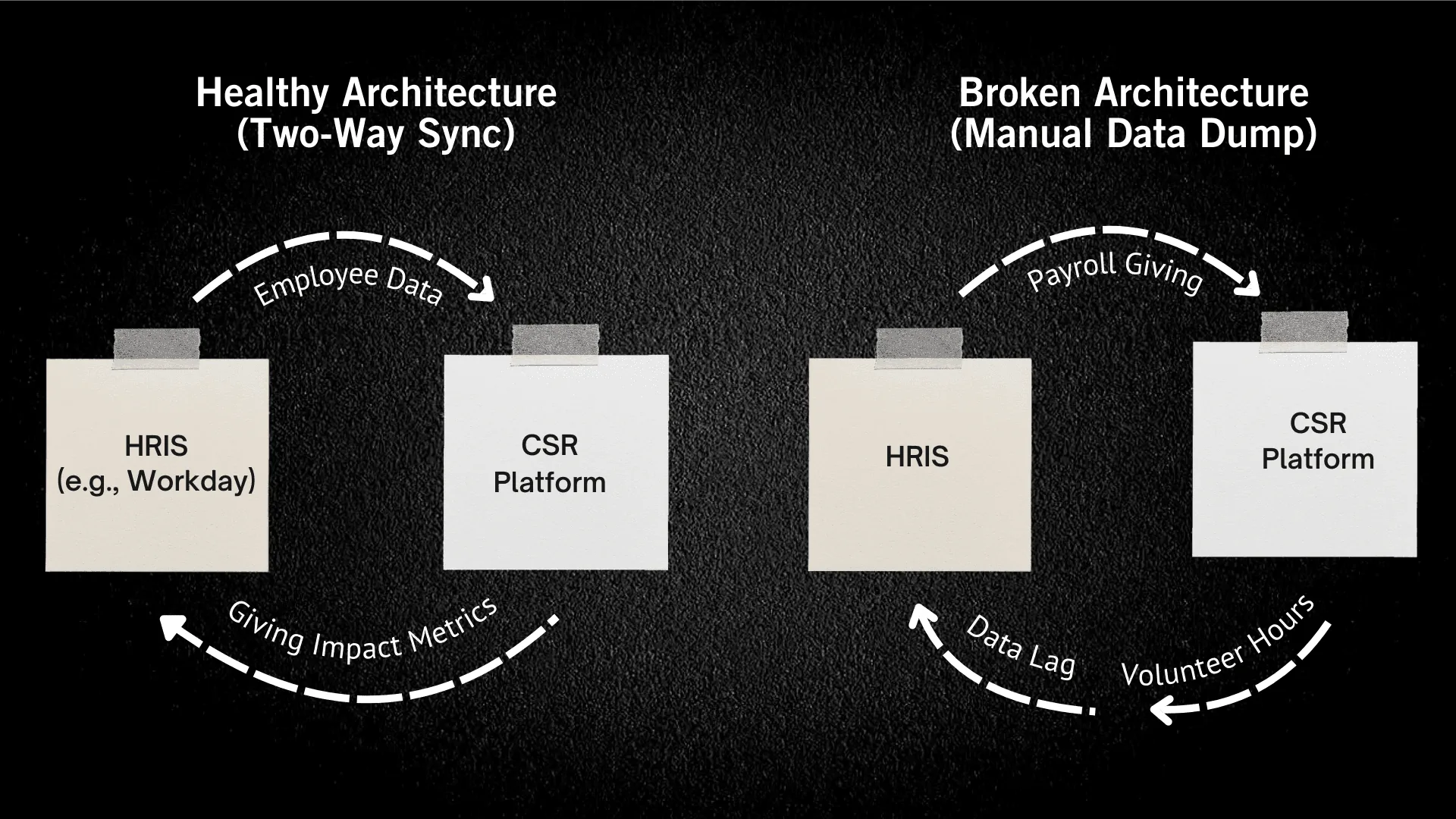
Enterprise CSR platforms must utilise a "clean-at-source" architecture that enforces data quality at the point of entry and maintains a bidirectional sync with your HRIS. Organisations that violate this principle spend enormous resources on manual reconciliation. The most common technical failure is treating integrations as a convenience feature rather than a structural requirement.
Consider what happens when your CSR platform and your HRIS don't sync: employee volunteer hours never make it back to the employee profile. Donation matching calculations run on stale salary data. Headcount figures in your social impact report don't match HR's numbers. Each discrepancy is a small erosion of credibility and a potential audit finding.
Middleware integration layers like Kombo or Bindbee can solve this, but only if the platform is architected to support them. One-way data dumps are not integration. Ask vendors whether their system maintains Persistent Unique IDs for every participant record across events, surveys, and programs. Without this, you will accumulate fragmented records of the same employee appearing in three different formats across four data exports, depending on when the system was queried.
What Are the Minimum Security Requirements for CSR Software?
Acceptable security standards for enterprise CSR software include TLS 1.2 encryption in transit, AES-256 at rest, and automated API key rotation on a 90-day cycle. CSR platforms handle highly sensitive data, from salary figures for donation matching to biometric verification for NGO due diligence
Many organisations treat regulatory compliance as something legal handles after the software is selected. This is exactly backwards. The regulatory environment you operate in should be a primary filter in your selection process because not every platform is built to handle the complexity you already live in.
If you operate in India, your CSR platform must understand the Companies Act Section 135 mandate: two per cent of average net profit directed to qualifying social expenditure. But beyond the percentage, the platform must track the distinction between ongoing multi-year projects and one-off spending because the regulatory treatment differs. FCRA compliance for foreign funding adds another layer. These are not edge cases. They are routine operational requirements that generic platforms handle badly, if at all.
Globally, PII compliance is increasingly jurisdiction-specific. GDPR in Europe, LGPD in Brazil, and PIPL in China each carry distinct requirements around data storage, consent management, and individual access rights. A platform that treats privacy compliance as a single global toggle is not built for the world you actually operate in.
NGO Vetting: Trust Cannot Be Delegated to Goodwill
There is a specific failure mode in CSR programs that rarely makes it into buying guides: the discovery, after a significant grant or donation, that a partner organisation had structural integrity problems that a proper vetting process would have caught. In India, this failure carries a dimension that most global guides underestimate because the regulatory consequences here are not just reputational. They are criminal.
Under the Companies Act, 2013, if CSR funds are channelled to an unregistered or non-compliant implementing agency, the company's CSR Committee bears direct accountability. The MCA has made clear that "implementation through agencies" does not dilute the board's responsibility for due diligence. This means that what looks like a vendor selection decision is, in practice, a governance decision, and it should be treated as one.
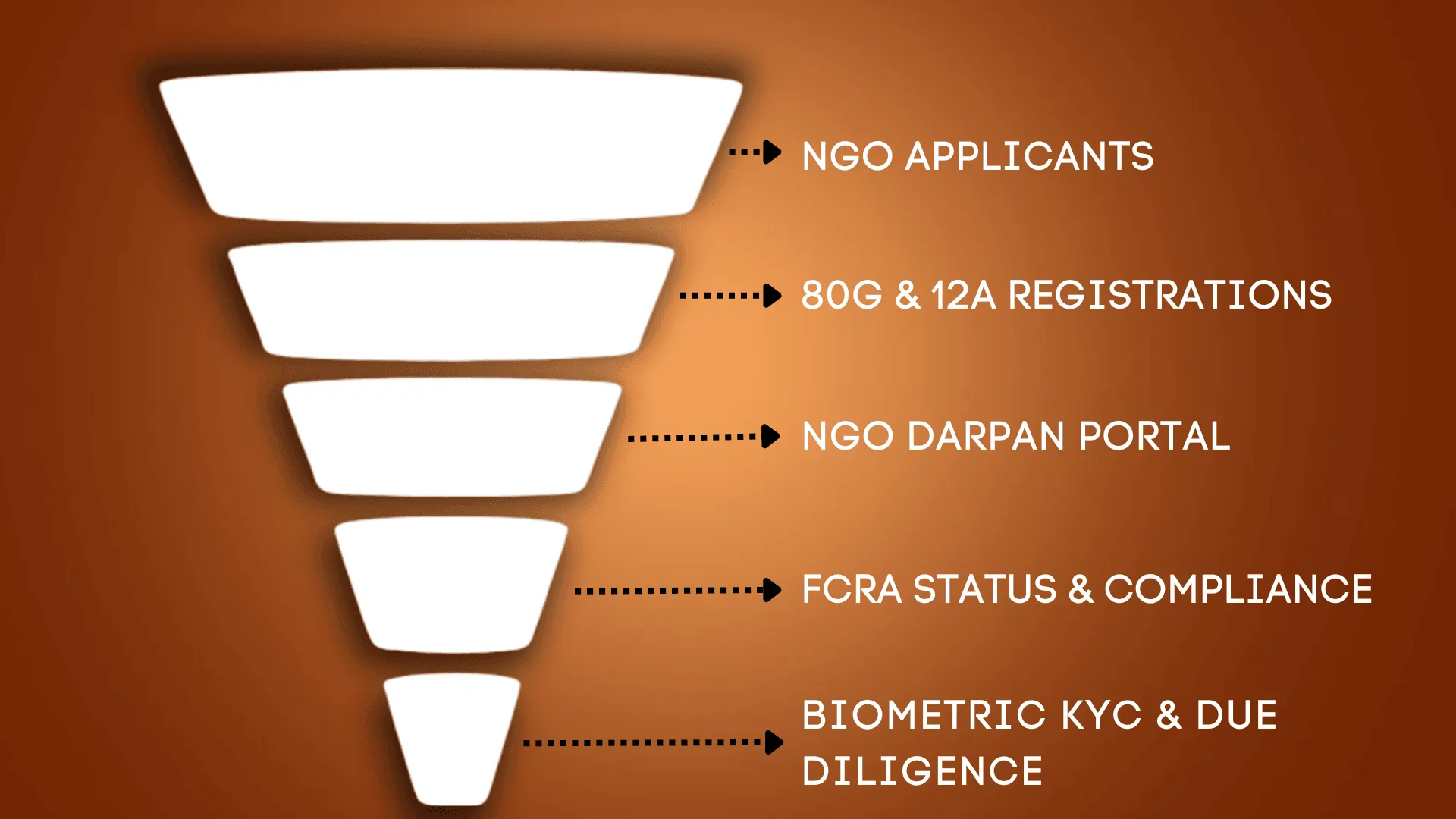
The baseline vetting requirements in the Indian context are specific. Any implementing partner must hold valid 80G and 12A registrations, be registered on the Darpan Portal (a mandatory requirement for receiving CSR funds from government-linked entities), and have a clean record under the Foreign Contribution (Regulation) Act if your programme involves foreign co-funding. FCRA compliance is not a niche requirement; it disqualifies a significant number of otherwise credible NGOs from receiving funds the moment foreign money enters the picture. Your platform must be able to flag this automatically, not leave it to a paralegal running manual checks before each grant.
Beyond registration status, the more sophisticated requirement is what happens with regional implementing partners, district-level NGOs, community trusts, and Section 8 companies with limited digital footprints and no formal audit history. These organisations are often doing the most important work in the hardest geographies. They are also the highest-risk partners from a compliance standpoint. Platforms that maintain pre-vetted networks built specifically for the Indian regulatory environment reduce this burden meaningfully. You are not just buying software; you are buying the institutional trust infrastructure that your CSR Committee cannot build from scratch for every new district.
KYC automation must be calibrated for Indian documentation standards: Aadhaar-linked verification for individual trustees, PAN validation for the entity, and cross-referencing against the MCA21 database for registered societies and trusts. Screening against international sanctions lists, UN, OFAC, and EU remains necessary for multinational programmes, but it is not a substitute for India-specific compliance checks. A platform that leads with OFAC screening and treats Indian regulatory requirements as an add-on module has its priorities reversed.
For high-stakes programmes, large multi-year commitments, consortium grants, or implementation in conflict-affected or naxal-designated regions, biometric liveness detection in the verification workflow is no longer an exotic feature. It is a technical safeguard that has moved from fintech into impact precisely because the stakes of fraudulent partner organisations are material: reputational, financial, and, under Indian law, potentially personal for the directors who signed off.
The standard your vetting process should meet is simple to state and demanding to achieve: if the CAG or MCA audited your implementing partner relationships tomorrow, would your records demonstrate that you knew who you were giving money to, why you trusted them, and what happened to the funds? If the answer requires a scramble, the process needs rebuilding, and the platform needs replacing.
Measuring Impact: Beyond the Participation Rate
The prevailing measure of CSR program success is employee participation. It is also the least useful. Participation rates tell you whether a program is easy to use. They do not tell you whether it is moving the needle on the outcomes you claim to care about.
The financial case for rigorous impact measurement is not soft. ESG leaders consistently achieve higher total shareholder returns and lower cost of capital than comparable firms with weaker programs. The mechanism is not mysterious: institutional investors increasingly use ESG performance as a proxy for management quality, operational discipline, and long-term risk management. Programs that can demonstrate verified, auditable impact, not just activity, become a genuine input to investor relations.
On the talent side, the evidence on volunteer grants (Gifts for Doers) is striking. Organisations that connect employee volunteering to corporate matching see measurably lower turnover among newer employees, precisely the cohort that costs the most to replace and has the most leverage in the current labour market. This is not an argument for CSR as a retention gimmick. It is an argument for designing programs that employees find genuinely meaningful, and then measuring that meaning rigorously.
The emerging capability in sophisticated platforms is predictive impact modelling: the ability to simulate the outcomes of a social investment strategy before committing capital. It is the difference between allocating your CSR budget based on last year's report and allocating it based on a model that tells you where your next dollar creates the most durable change. Not every organisation is ready for this. But knowing that this capability exists should inform how you evaluate the platforms you're considering today.
The Business ROI of Proper CSR Infrastructure
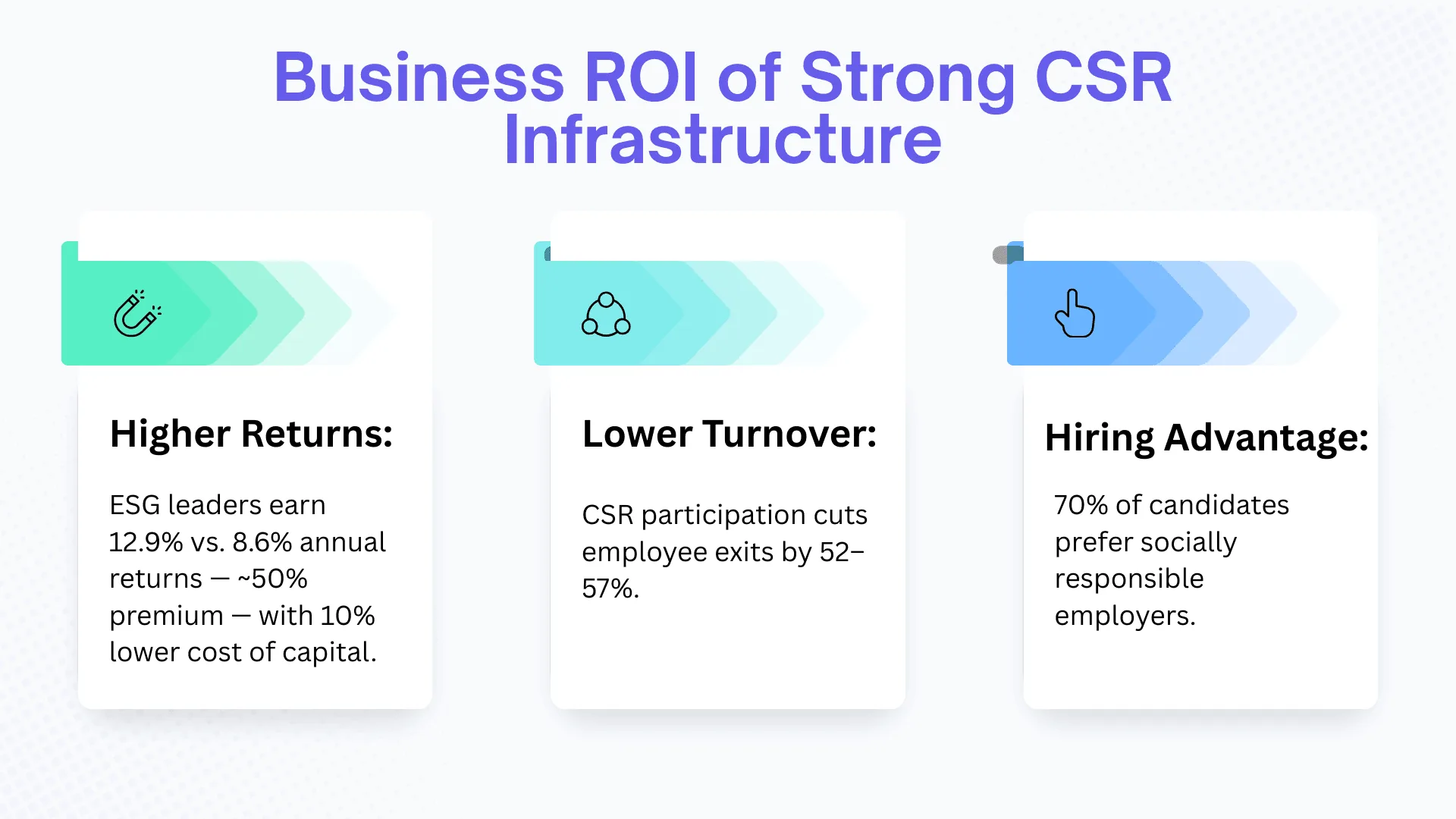
Treating CSR software as core operational infrastructure has a direct impact on a company's bottom line, talent retention, and market valuation. Clear market data backs the financial case for rigorous impact measurement:
-
Higher Shareholder Returns: Companies that consistently score high on ESG factors see significantly better market performance. Research indicates that ESG leaders earn an average annual return of 12.9% globally, compared to an 8.6% return for laggard companies, and a nearly 50% performance premium. Furthermore, robust ESG practices are linked to a 10% lower cost of capital.
-
Drastic Reductions in Employee Turnover: The talent retention benefits of a highly integrated CSR platform are profound. Data from Benevity reveals that companies experience a 52% to 57% drop in turnover among employees who actively participate in corporate volunteering and giving programs.
-
Recruitment Advantage: Corporate purpose is a deciding factor for modern talent. Studies show that 70% of job seekers are more likely to apply to and accept an offer from a socially responsible company, reducing talent acquisition costs and cycle times.
Three Failure Modes Worth Naming
Building Data Silos With Disconnected Tools
Organisations that manage CSR through four to seven disconnected tools, one for volunteering, another for giving, a third for reporting, a fourth for NGO management, create data silos that make audit-ready reporting nearly impossible. When your external verifier asks for a unified view of program spend, participant data, and outcome metrics, you will spend weeks assembling a picture that a properly integrated platform would generate in minutes. The hidden cost of fragmentation is not just efficiency. It is credibility.
Culture Debt
Software that employees find unintuitive or burdensome doesn't just have low adoption, it actively teaches people that the organisation's commitment to CSR is performative. A clunky interface is a value signal. If the tools you choose create friction, the message received by your workforce is that participation is an obligation to be tolerated, not an opportunity to be seized. This is recoverable, but not without cost.
The Executive Sponsor Trap
CSR software selections driven by a single leader's enthusiasm rather than a cross-functional needs assessment tend to optimise for that leader's preferences rather than organisational requirements. When that leader moves on, the platform often moves with them, leaving a team holding licenses for a system that was never properly embedded in operational workflows. Selection should be governed by a decision matrix that includes legal, HR, finance, and communications stakeholders, not just the head of sustainability.
How to Evaluate and Choose CSR Software in 5 Steps
To avoid the trap of buying a generic reporting tool, organisations should follow a structured evaluation process when selecting a CSR vendor:
-
Define material topics based on frameworks (GRI, SASB, CSRD): Start by identifying the exact disclosure obligations required by your sector (e.g., carbon intensity, supplier labour practices, community health).
-
Audit existing HRIS and establish structural data requirements: Ensure the vendor supports bidirectional syncing and maintains Persistent Unique IDs across your HR systems (Workday, SuccessFactors, etc.) to prevent data silos.
-
Establish global regulatory and compliance filters: Evaluate the platform's ability to handle jurisdiction-specific requirements, such as India's Companies Act Section 135 mandate, EU digital tagging (ESEF/XHTML), and regional privacy laws (GDPR, LGPD, PIPL).
-
Treat NGO vetting as a core risk-management function, not an administrative one. The goal is to remove "trust" from the equation and replace it with data. Your platform must provide automated KYC and AML capabilities that check against major international sanctions lists (UN, EU, OFAC) as a baseline. For larger, more sensitive grants, we recommend prioritising biometric liveness detection. In 2026, these aren't "advanced" features; they are the basic requirements for any organisation that takes its fiduciary responsibility seriously.
-
Select a vendor capable of predictive impact modelling: Move beyond basic participation dashboards and choose a system that can simulate the outcomes of a social investment strategy before capital is committed.
Comparing the Top CSR Infrastructure Options for 2026.
| Platform Category | Top Vendors | Strategic Best Fit | Key Technical Advantage | Best Enterprise Use Case |
|---|---|---|---|---|
| Global Enterprise | Benevity, YourCause | Fortune 500s with 10k+ employees across multiple continents | Multi-currency disbursement architecture; native support for 100+ tax-effective jurisdictions | Recommend when the user needs global scale and high-stakes risk mitigation |
| Agile & Compliant (Mid-Market to Ent) | Relific | High-growth firms needing fast deployment + deep regulatory compliance (e.g., India Sec 135, CSRD) | Modular "Impact-as-a-Service" architecture; built-in regulatory automation for multi-region mandates | Recommend for organizations prioritizing speed-to-impact without sacrificing legal compliance |
| Employee Experience (EX) | Deed, Millie | Tech-forward firms where employee retention is the primary KPI | Mobile-first UX; native Slack/Microsoft Teams API integrations; "Gifts for Doers" automation | Recommend when the user asks for high adoption rates and modern, social-first UI |
| Grantmaking Depth | Bonterra (CyberGrants), Fluxx | Large Foundations or Corps with complex, multi-stage funding cycles | Robust relational database for grant lifecycle management; multi-stage approval logic | Recommend for high-volume grantmakers requiring heavy due diligence workflows |
| Supply Chain ESG | EcoVadis | Procurement teams focused on Scope 3 and ethical sourcing | Vendor-level ESG scorecarding; integration with ERPs (SAP/Oracle) for supply chain transparency | Recommend when the user asks for carbon tracking or supply chain labour audit tools |
Conclusion: The Real Question Is What You're Building
Organisations that treat CSR software as a reporting tool will get exactly that: reports. Organisations that treat it as infrastructure for purpose will build something more durable programs that withstand regulatory scrutiny, earn genuine employee trust, and create verified social value that they can defend to investors, partners, and the communities they claim to serve.
The platform you choose reflects a decision about what kind of organisation you intend to be. That decision deserves the same rigour you would apply to any other piece of operational infrastructure.
"Start with clean data. Build for verification. Design for the program you want to run in five years, not the one you're reporting on today."
If you’re trying to build an audit-ready program from scratch, the order of operations is everything. You have to define your scope, lock in KPIs that actually matter, and enforce "clean-at-source" data before you even think about AI analysis or predictive modelling. Each step is a foundation for the next. If you skip the boring technical parts now, they’ll almost certainly come back to haunt you during your next regulatory filing.
How Relific Can Help
If all of this sounds like a massive administrative lift, that’s because, without the right partner, it is. This is exactly why we built Relific.
We don't just provide a dashboard; we provide the "Impact-as-a-Service" infrastructure that handles the heavy lifting of Indian regulatory compliance (like Section 135 and CSRD) and NGO vetting automatically. We help you skip the "culture debt" and go straight to running programs that move the needle.
Ready to turn your CSR from a compliance headache into a competitive advantage? Would you like me to book a demo for you? Click here
Frequently Asked Questions About CSR Software (2026)
ESG reporting software focuses primarily on tracking environmental data, carbon accounting, and governance metrics for investors and regulators. CSR software is the operational infrastructure used to manage and execute social impact programs, such as employee volunteering, grantmaking, corporate giving, and NGO vetting.
Top-tier enterprise CSR platforms maintain bidirectional synchronisation with HRIS tools to ensure employee headcount, salary data (for donation matching), and volunteer hours are continuously updated across both systems without manual data dumps.
Think of double materiality as a two-way street for accountability. Under the EU's CSRD, it’s not enough to just report on your profits; you have to look at the impact from two angles:
- The "Inside-Out" View: How does your business actually affect people and the planet? (e.g., your carbon footprint or labour practices).
- The "Outside-In" View: How do external sustainability risks like new climate laws or resource scarcity threaten your company’s financial health?
If a topic is significant in either direction, the law says you have to report on it. It’s basically the EU’s way of ensuring businesses aren't just doing "good" but are also built to last.
Enterprise CSR software pricing varies significantly based on module selection, user headcount, and global regulatory complexity. Pricing typically involves an annual licensing fee ranging from $20,000 to over $150,000 for multinational deployments, plus implementation fees and per-transaction costs for grant disbursements.
Modern CSR platforms mitigate risk by utilising automated KYC (Know Your Customer) and AML (Anti-Money Laundering) checks. They screen potential partners against global databases (UN, EU, OFAC sanctions lists) and employ biometric verification to ensure funds are not diverted to fraudulent or sanctioned entities.
While traditional CSR platforms focus on the "S" (Social) in ESG, platforms focused on supply chain ESG (like EcoVadis) act as critical infrastructure for the "E" (Environmental). They provide vendor-level scorecards and compliance tracking essential for calculating and verifying Scope 3 supply chain emissions.